

The Spring Restart Gap: Why HVAC Cash Runs Low in April
Quick answer
HVAC cash often runs lowest right when cooling season starts, because you buy equipment and run full payroll weeks before installs get paid. That shortfall is the restart gap. In our example it's $14,000. Count it in your slow-season cash reserve so it doesn't catch you short.
The full answer
The phones are ringing again. Installs are booked out two weeks. It should feel like the hard part of the year is over. Then you look at the bank balance and it's lower than it was all winter.
Why does cash drop when the busy season starts?
Because the money goes out before it comes in. To get ready for cooling season, you stock equipment and parts, bring the crew back to full hours, and fuel up the trucks. Customers pay for an install after it's done, and some pay on terms. So for the first few weeks, spending runs well ahead of collections.
How big is the restart gap?
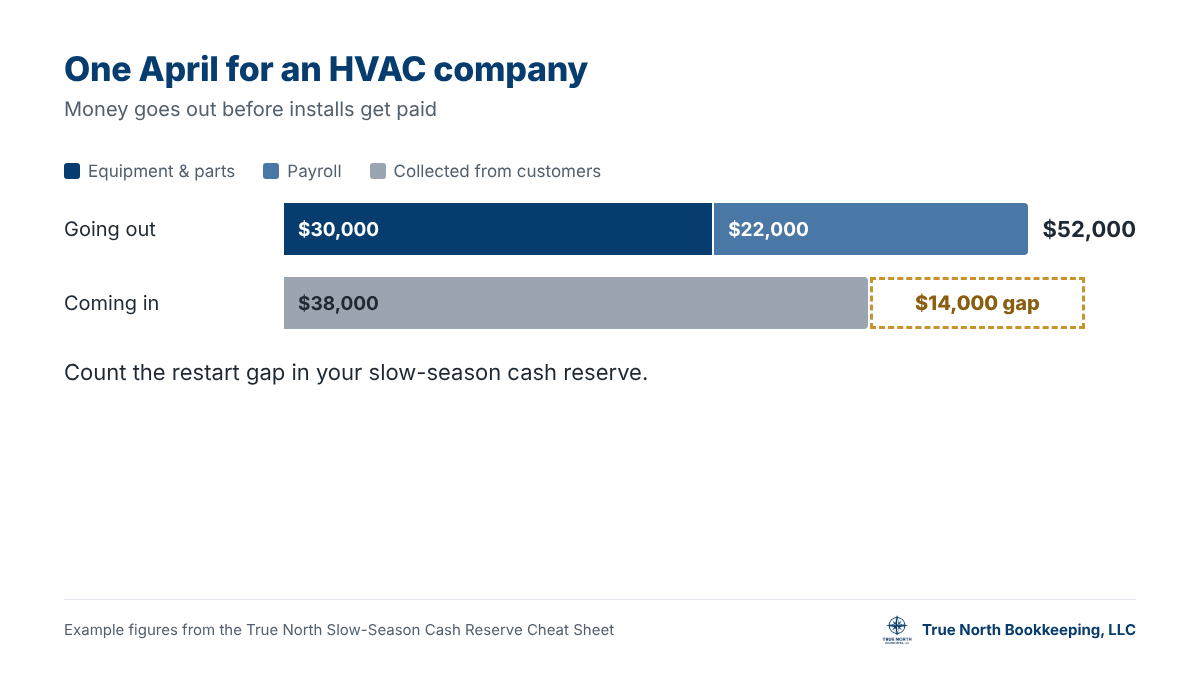
Here's an example for one April:
| April | Amount |
|---|---|
| Equipment and parts bought | $30,000 |
| Payroll | $22,000 |
| Total going out | $52,000 |
| Collected from customers | $38,000 |
| Restart gap | $14,000 |
That $14,000 has to come from somewhere: the bank account, a credit line, or the owner's own pocket.
Doesn't HVAC also slow down in fall?
Yes. Many HVAC companies get two quieter stretches, in spring and fall, between heating and cooling peaks. Each one can bring its own restart gap when the next busy season starts. Plan for both.
How do I plan for it?
Work out last year's gap: take your first busy month's costs and subtract what you collected that month. Then add it to your slow-season cash reserve, along with the monthly shortfall and the once-a-year bills. The Slow-Season Cash Reserve Calculator does this math and turns it into a weekly savings target.
What makes the gap bigger or smaller?
Three things: how much stock you buy up front, how fast you bring the crew back to full hours, and how quickly customers pay. A company that invoices the day an install is done and takes card payments on site will have a smaller gap than one that bills at the end of the month. Ordering equipment as installs are booked, instead of stocking up all at once, helps too.
What to do this week
- Look at last year's month-end bank balances and find your lowest month.
- Work out last spring's restart gap from your books.
- Set aside a small amount each week now, while work is steady.
How True North helps
True North Bookkeeping keeps your books current every month, so you can see your cash low point coming instead of discovering it. When the books are closed by the 15th of the following month (once you’ve answered open questions and sent needed documents), last month's numbers are ready when you need them for planning.
Use the free Slow-Season Cash Reserve Calculator to find your reserve target and weekly savings. Questions? Text Stephen at 623-738-5406.